
Wilmington Fence Types
Wood Fence Installation in Wilmington, NC
Classic privacy and decorative wood fencing in pressure-treated pine. 15-year warranty against rot and termites; lifetime warranty on posts.
- Lifetime Transferable Warranty
- Free On-Site Estimates
- Locally Owned & Operated
- Open 24 Hours, 7 Days
- Licensed & Insured
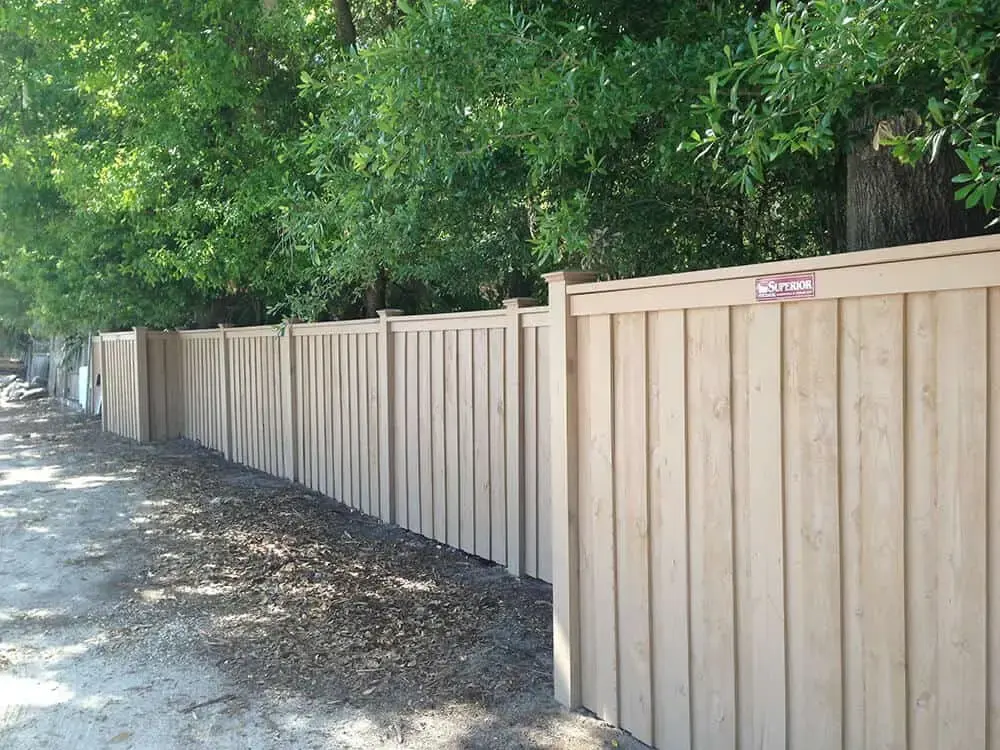
Wood Fencing in Wilmington
Wood is the oldest fence material and still one of the most requested around Wilmington. There’s a reason for that. It suits the pine and live oak lots this part of the coast is known for, it’s the default material in many neighborhood covenants, and a well-built wood fence has a warmth and weight that no vinyl or aluminum panel replicates.
It also works harder here than it does inland, and it’s worth being straight about that up front. Coastal air is humid year-round, the sun runs strong for most of the calendar, and salt carried on the wind is rough on anything metal holding the boards together. Wood grays faster here. Untreated surfaces check sooner. None of that makes wood a bad choice — it makes the spec matter. The version worth installing starts with pressure-treated pine, kiln-dried and treated all the way through the board so it resists the moisture and the termites that come with this climate, and it continues into the fasteners: coated or stainless hardware, not the plain steel that rusts out and stains a fence line within a few seasons of salt exposure.
Style matters more with wood than with any other material, because the construction method changes both the look and how the fence behaves in a blow. Shadowbox alternates boards on opposite sides of the rail, which keeps air moving through the fence line and meaningfully reduces the wind load that racks and leans solid fences when a tropical system comes through. On an open lot near the water, that airflow is the single most useful thing you can build into a wood fence. Board-on-board stacks boards with a slight overlap for a completely solid visual barrier that looks the same from both sides — the better call when privacy is the whole point and the run is sheltered, and it’s what most shared property lines and “good side out” covenants want. French Gothic pickets give a more decorative look along a front yard or driveway entrance.
Every post goes into concrete. Sandy coastal soil sheds water quickly, which is genuinely helpful at the base of a post, but sand gives up its hold on a tamped post far more easily than heavier ground does. The load we’re building against is lateral — wind pushing the fence over and pulling the posts up — so footing depth and diameter get sized to the height of the fence and the exposure of the run. That’s what backs our lifetime warranty on posts and rails, alongside a 15-year warranty against rot and termite damage on the boards.
Wood does need upkeep, and more of it here than most people expect — a good stain or sealant every few years keeps the boards looking sharp and buys the fence years. Call us at (910) 765-0965 any time, day or night, seven days a week, or request a free on-site estimate. We’ll measure your property and show you exactly what a wood fence looks like in your yard.
What Sets Our Wood Fencing Apart
-
Pressure-treated pine
Treated against North Carolina humidity and termites
-
Shadow box construction
Allows airflow, reduces wind load on the fence line
-
Picket variants
French Gothic, dog-eared, scalloped, and custom designs
-
Set in concrete
Every post set in concrete for maximum stability in North Carolina's red-clay soil
Warranty
15-year rot and termite protection; lifetime warranty on posts and rails
Wood Fence Styles
- Shadow box privacy
- Dog-eared
- French Gothic picket
- Board on board
- Split rail
Still the most requested privacy material, but coastal humidity and UV work on it faster than inland. Shadowbox and spaced designs let storm wind pass instead of pushing on a solid face.
Cities We Install Wood Fencing In
Wood Fencing Questions
What type of wood do you use for coastal installations?
We install pressure-treated pine — the same material used in residential decks up and down this coast. The treatment runs through the board rather than sitting on the surface, which is what stands between the wood and the two things that work on it hardest here, moisture and termites. Be aware that wood ages faster near the water than it does inland. Humidity is constant, the sun is intense most of the year, and untreated surfaces gray sooner. Treatment slows that down; it doesn't stop it.
How do you set posts in sandy coastal soil?
Every post goes into concrete — no exceptions — but the reason is different here than it is inland. Sandy soil drains fast, so standing water at the post base is rarely the problem. The problem is grip. Sand holds a post far more loosely than heavier ground, and the load a coastal fence actually fights is wind trying to rack the line sideways and lift the posts out. That's a question of footing depth and diameter, sized to the fence height and how exposed the run is. It's also why our posts and rails carry a lifetime warranty while the boards carry a 15-year rot and termite warranty.
Can I stain or paint my wood fence?
Yes, and here we'd push you toward it. A quality exterior stain or sealant adds a moisture and UV barrier on top of the treatment, and on the coast that barrier is doing real work — it's the main thing slowing down the graying and surface checking that constant humidity and strong sun produce. We can install raw and let you finish it, or talk through options at the time of your estimate.
What hardware do you use near salt water?
This is where a lot of wood fences quietly fail. The boards can be fine while the fasteners rust out, streak the wood, and let the rails go. Within a few miles of the water, plain steel screws and cheap hinges have a short life. We specify coated or stainless fasteners and corrosion-resistant gate hardware for coastal installations, and we'll tell you at the estimate what we're putting in your fence.
What styles are available in wood?
The most common are shadowbox privacy, board-on-board, dog-eared, French Gothic picket, and split rail. Shadowbox and board-on-board are the most popular for backyard privacy, and both look identical from the front and back, which satisfies the "good side out" language in a lot of neighborhood covenants automatically. Shadowbox is the one we point exposed lots toward, because the alternating boards let wind move through the fence instead of pushing on it. We can also cut custom picket profiles on request.
Get Your Free Wood Fence Quote
Tell us about your project and we’ll reach out to schedule a free, no-pressure estimate. Our line is open 24 hours a day, seven days a week.