
Wilmington Fence Types
Pool Fence Installation in Wilmington, NC
Code-compliant pool fences in aluminum and vinyl. Self-latching gates, proper picket spacing, and North Carolina pool barrier code expertise.
- Lifetime Transferable Warranty
- Free On-Site Estimates
- Locally Owned & Operated
- Open 24 Hours, 7 Days
- Licensed & Insured
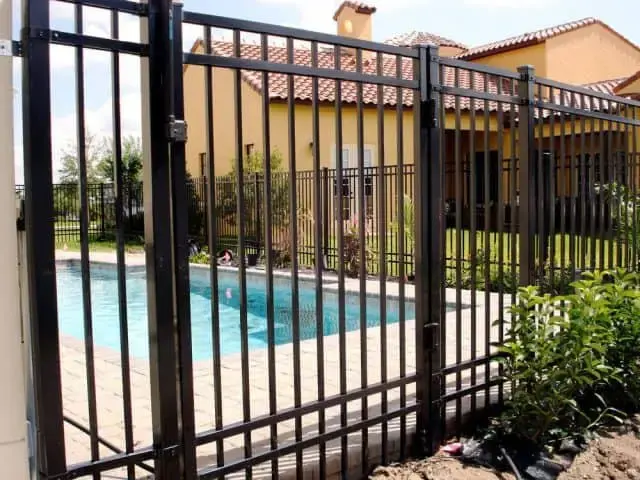
Pool Fence Installation in Wilmington
A pool fence is not optional in North Carolina. State law requires a barrier around residential in-ground pools, and the jurisdictions along this coast — New Hanover County, the City of Wilmington, Brunswick and Pender counties, and the beach towns in between — handle the permitting and inspection that go with it. Getting the barrier wrong means a failed inspection, a delay in opening your pool, and real liability if something goes wrong. We install pool fences for exactly one reason: to get it right the first time.
The requirements break into a few categories. There’s a minimum height for the barrier. There’s a maximum gap between pickets, set narrow enough that a small child cannot pass through, along with rules on rail placement so the fence doesn’t become a ladder. And there’s gate hardware — every gate into the enclosure must close on its own and latch on its own, with the latch placed out of a child’s reach from the outside. Those categories are consistent; the specific figures come from the code edition your jurisdiction has adopted. Coastal properties can also pick up a second set of local rules on fence height and placement, and lots close to the water can fall under state coastal-area permitting, with the details varying by town and by proximity to the water. We confirm everything that applies to your address, build to it, and pull the fence permit where it’s required so you’re not coordinating paperwork between contractors while your pool sits waiting.
For material, most homeowners here with in-ground pools choose aluminum. It has no iron in it to rust, it handles poolside chlorine and salt air without complaint under our SolarShield powder coating, and the open picket design keeps the pool visible from the house — a practical safety feature, not just an aesthetic one. Open pickets carry a second advantage on this coast: they let storm wind pass through rather than catching it, which is the difference between a barrier that’s still standing and plumb after a tropical system and one that has to be reset before it passes inspection again. Aluminum comes in 3-rail and 2-rail configurations and carries a lifetime transferable warranty. If you have existing vinyl fencing in the yard and prefer a consistent look, vinyl works too, also with a lifetime warranty.
Posts go into concrete regardless of material, sized for coastal ground rather than to a default. Sandy soil drains fast, which keeps water off the post base, but it holds a post loosely — the load a pool barrier has to survive here is lateral wind trying to rack the line and lift the posts, so footing depth and diameter do the work. On low-lying lots where the water table sits high, that spec changes again. It matters twice over on a pool fence: a barrier that leans or shifts two years after install is a problem for the look, and a barrier that’s out of plumb can fall out of compliance.
We answer the phone 24 hours a day, seven days a week, and we schedule around your pool contractor. If your pool is going in this season and the timeline is tight, that matters. Call (910) 765-0965 or request a free on-site estimate and we’ll walk your yard, confirm the requirements that apply to your address, and put together a quote that covers everything.
What Sets Our Pool Fence Fencing Apart
-
GA pool code compliant
Picket spacing, height, and gate hardware all meet state and county requirements
-
Self-closing, self-latching gates
Required by code; we install only compliant hardware
-
Aluminum or vinyl
Both materials suitable; aluminum more popular for in-ground pools
-
Permit support
We handle pool fence permits where required
Warranty
Lifetime transferable on aluminum; lifetime on vinyl
Pool Fence Fence Styles
- 54" aluminum 3-rail
- 48" aluminum 2-rail
- Removable mesh (for select use cases)
Required for residential in-ground pools. Requirements vary by town and by how close the property sits to the water, so we confirm what applies to your address and handle permitting where required.
Cities We Install Pool Fence Fencing In
Pool Fence Installation Questions
Does North Carolina require a fence around a residential pool?
Yes. North Carolina requires a barrier around residential in-ground pools. The rules cover a minimum barrier height, the maximum gap between pickets, and gate hardware that closes and latches on its own. Local jurisdictions handle inspection and can add requirements of their own, and along this coast that second layer is real — the beach towns commonly have their own fence rules, and a property close to the water can fall under additional coastal-area permitting on top of the pool barrier requirements. What applies varies by town and by how close the lot sits to the water, so we confirm the requirements for your specific address before we quote the job.
What kind of gate hardware does pool code require?
Every gate into the pool enclosure has to be self-closing and self-latching, with the latch positioned so a small child cannot reach or operate it from outside the barrier. We install pool-rated hardware on every pool gate and set it to spec — no shortcuts, because this is the item inspectors check first. Near salt air we also specify corrosion-resistant hardware, since a self-closing hinge or latch that seizes up is both a maintenance problem and a compliance problem.
What's the difference between aluminum and vinyl for a pool fence?
Aluminum is the more popular choice for in-ground pools on this coast. There's no iron in it to rust, it handles chlorine and salt air well, it carries a lifetime transferable warranty, and the open picket design gives you clear sightlines into the pool area from the house — and lets storm wind pass through rather than catching it. Vinyl works well too, especially if your yard already has vinyl fencing and you want a consistent look.
Do I need a permit for a pool fence around Wilmington?
In most cases, yes — the barrier is typically permitted and inspected alongside the pool itself, and the process differs depending on whether you're in the City of Wilmington, unincorporated New Hanover County, one of the beach towns, or Brunswick or Pender County. We pull the fence permit where it's required, confirm which reviews apply to your address, and coordinate with your pool contractor so the barrier is in place when the inspector arrives and the schedule doesn't slip.
What picket spacing is required by code?
Pool barrier code sets a maximum gap between pickets, narrow enough that a small child cannot pass through, and it pairs that with a minimum barrier height and rail placement rules that keep the fence from being climbable. The exact figures come from the code edition your jurisdiction has adopted. We verify the current requirements for your address and build the enclosure to meet them.
Get Your Free Pool Fence Fence Quote
Tell us about your project and we’ll reach out to schedule a free, no-pressure estimate. Our line is open 24 hours a day, seven days a week.